How to seat your wedding guests: layouts, tables and who sits where
6 min read
A seating plan is a quiet kindness. Done well, nobody notices it: every table talks, the grandparents can hear, and the cousins who have not spoken in years are a comfortable distance apart. It is easier than it looks once you choose the room before the names.
Choose the layout before the names
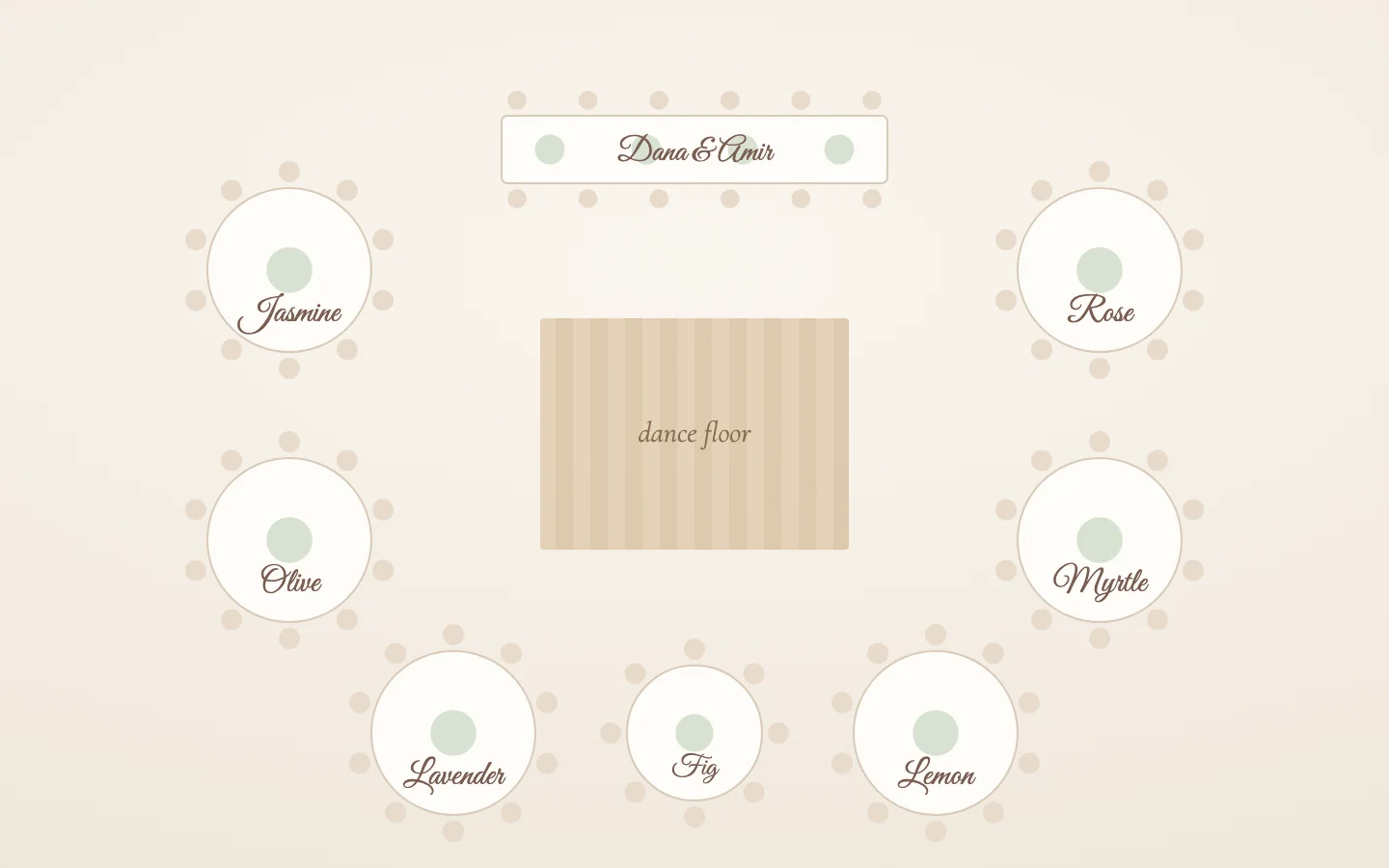
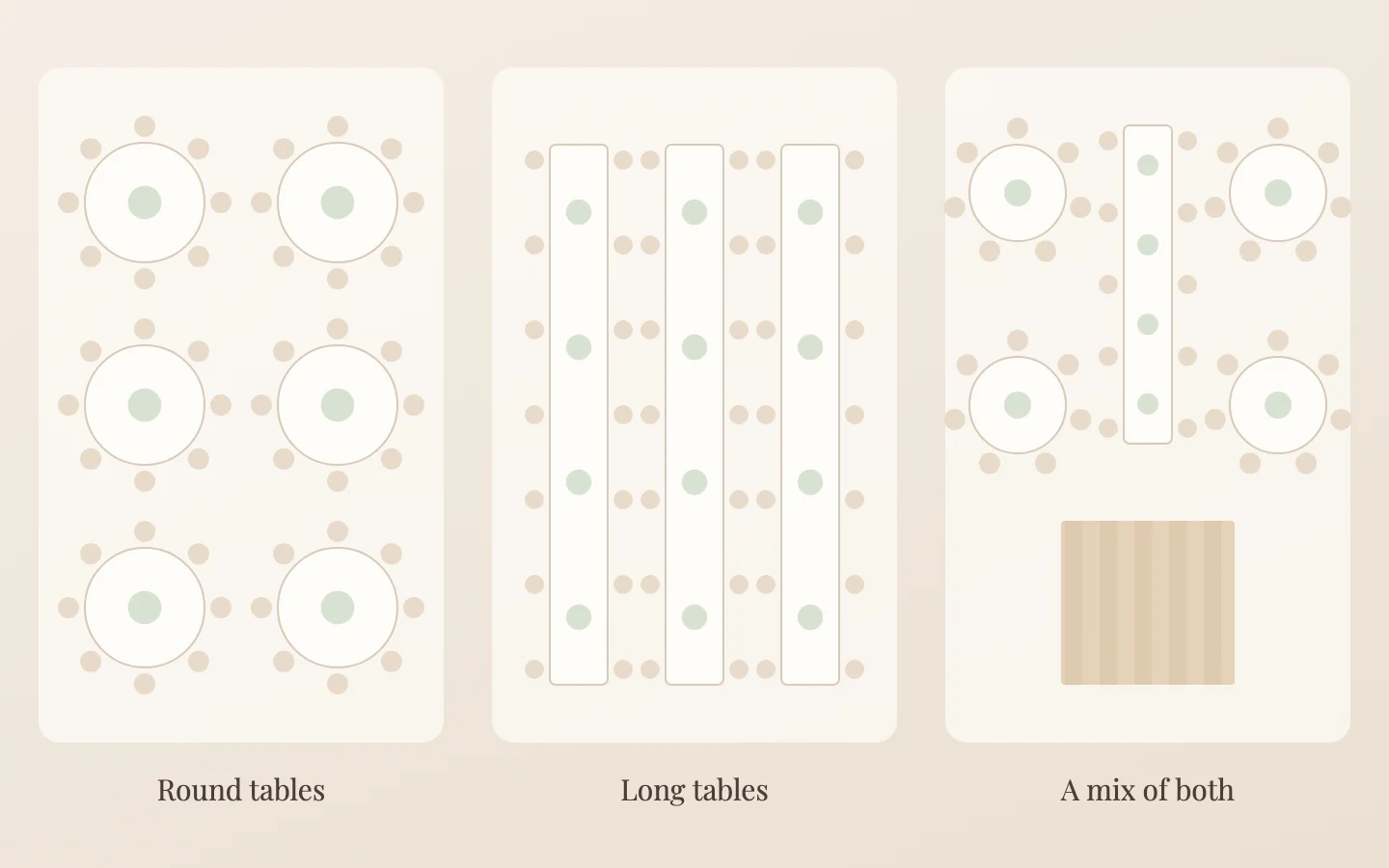
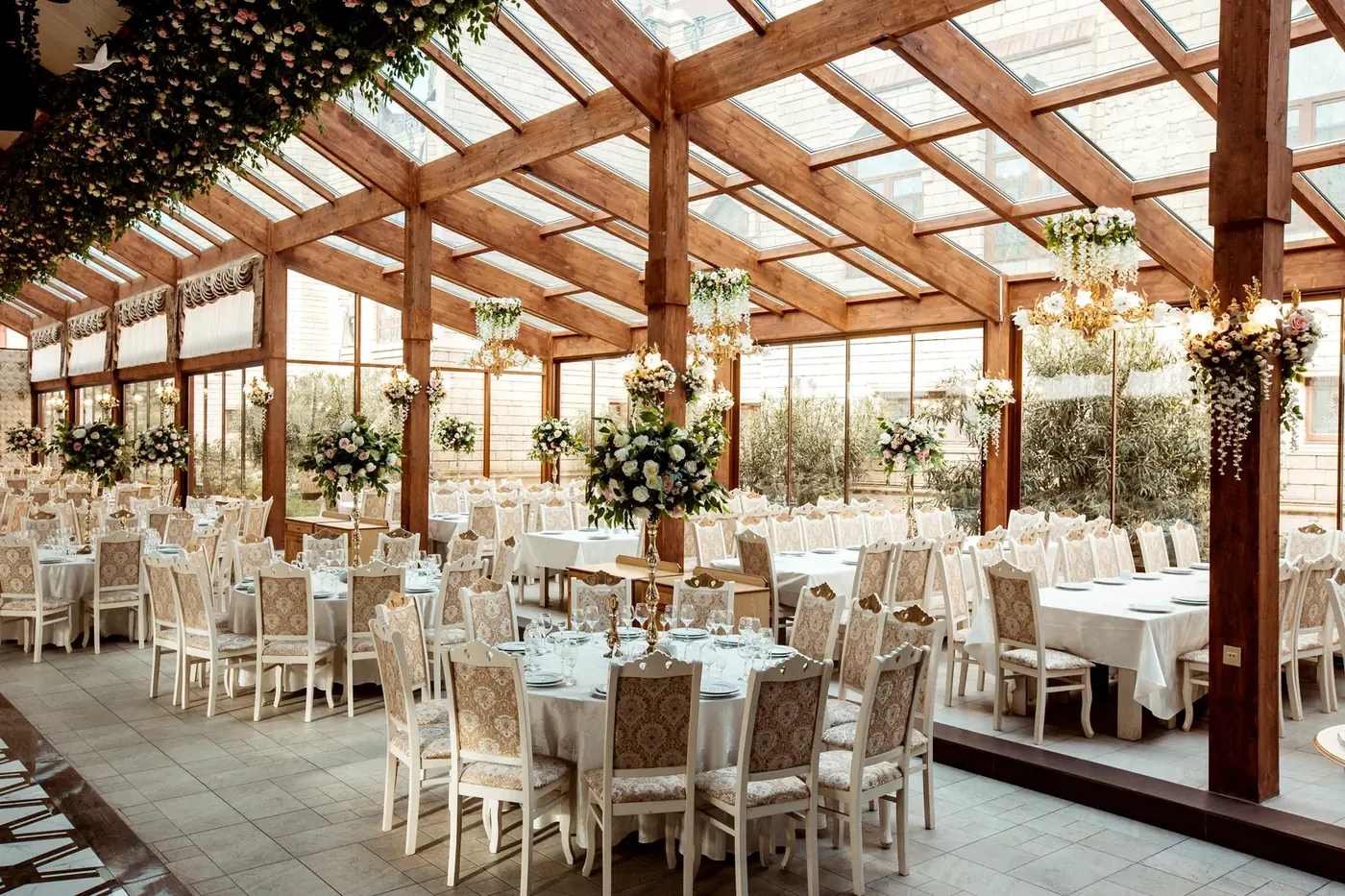
Round tables of eight to ten are the classic: everyone can talk to everyone at their table, and a room of them is easy to move through. Long banquet tables seat more people in the same space and feel like a big family dinner, at the cost of only talking to your neighbours and the people opposite.
Many rooms work best mixed: long tables down the middle for the friends, rounds at the sides for the families. A small wedding can sit at one long table, or a U-shape, so that everyone can see everyone.
A head table, a sweetheart table, or neither
A head table seats the couple with the wedding party, facing the room. A sweetheart table seats the couple alone, which frees the wedding party to sit with their own partners. Some couples sit at a table among their guests, or move between tables during dinner. There is no wrong answer, only the question of who you want to eat with.
Group by who knows whom
Start with circles rather than people: his family, her family, school friends, university friends, work, the neighbours. Most tables come out of one circle. Where a table has to mix two, seat a connector, someone who knows both, at its centre.
Avoid the singles table and the leftovers table. Seat people where they will have someone to talk to, not by their relationship status, and give every table at least two people who will carry the conversation.
Make everyone comfortable
Seat older guests near the couple but away from the speakers, with an easy walk to the door and the toilets. Put families with small children near an exit, so a tired toddler can be taken out without crossing the room. Guests who use a wheelchair or a walker need a place at a table end, with a clear path to it.
Seat guests who share a language together, so the guests who came from abroad have someone to talk to through the speeches. Seat separated parents at tables of their own, each with their own people, and at the same distance from you. And let the caterer know, by table, who needs which meal.
Tables, or seats too
You can assign a table and let guests choose their seat at it, or assign every seat with a place card. Assigned seats suit a formal plated dinner and tables of mixed groups; table-only is lighter and usually enough.
Without the spreadsheet
Do the plan after the reply deadline, when you know who is coming, and expect to change it until the week before. In MyEventOS you lay out your tables in Manage guests and drop each party onto one, so families stay together and every table shows how full it is. Print it or save it as a PDF for the venue.
Collect the answers while you are at it
MyEventOS turns the invitation, the RSVP and the guest list into one link, and counts the replies as they land. Free to design, free to send, and the first ten replies are included.
Start creating free