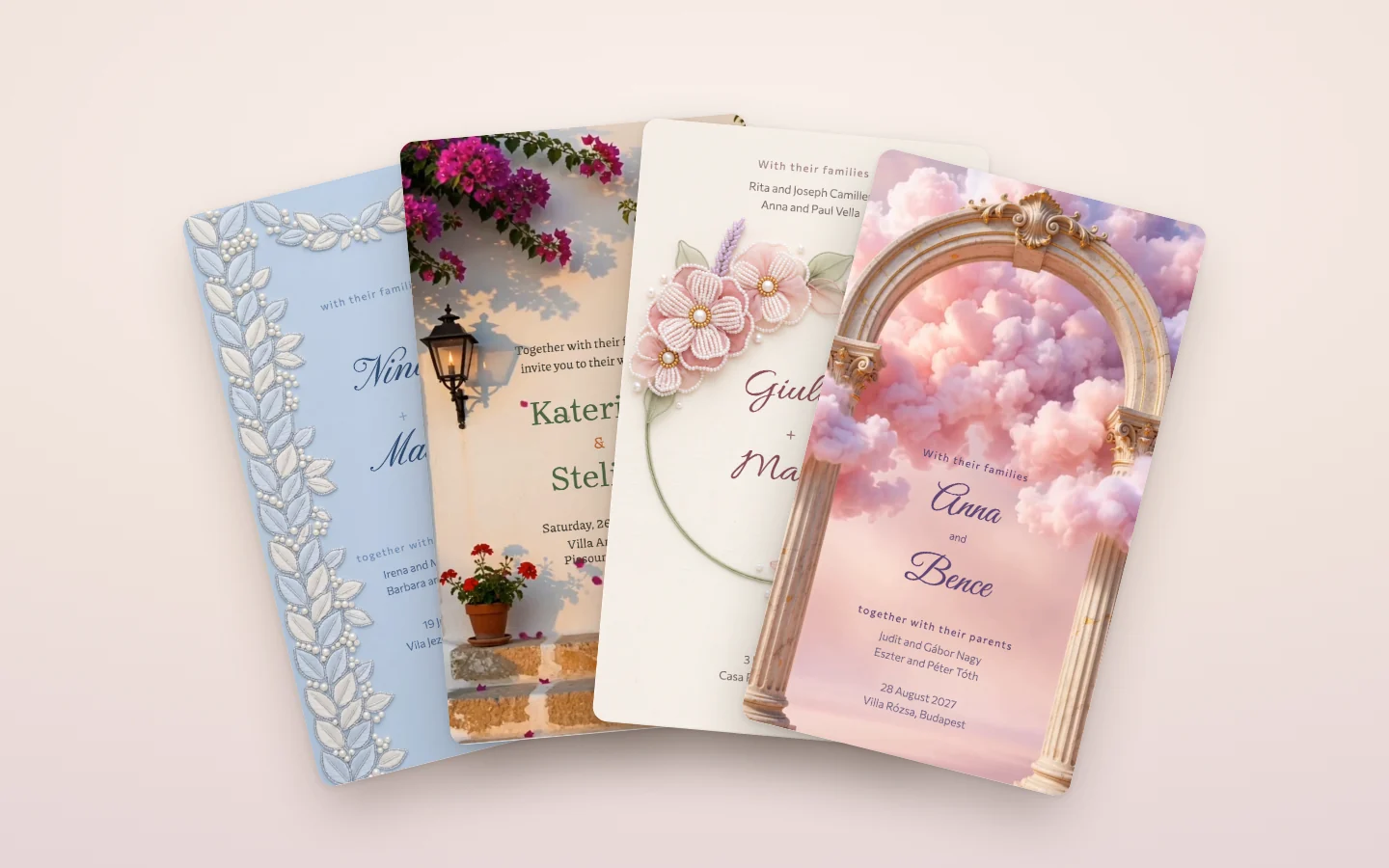
Digital or paper wedding invitations: how to choose
5 min read
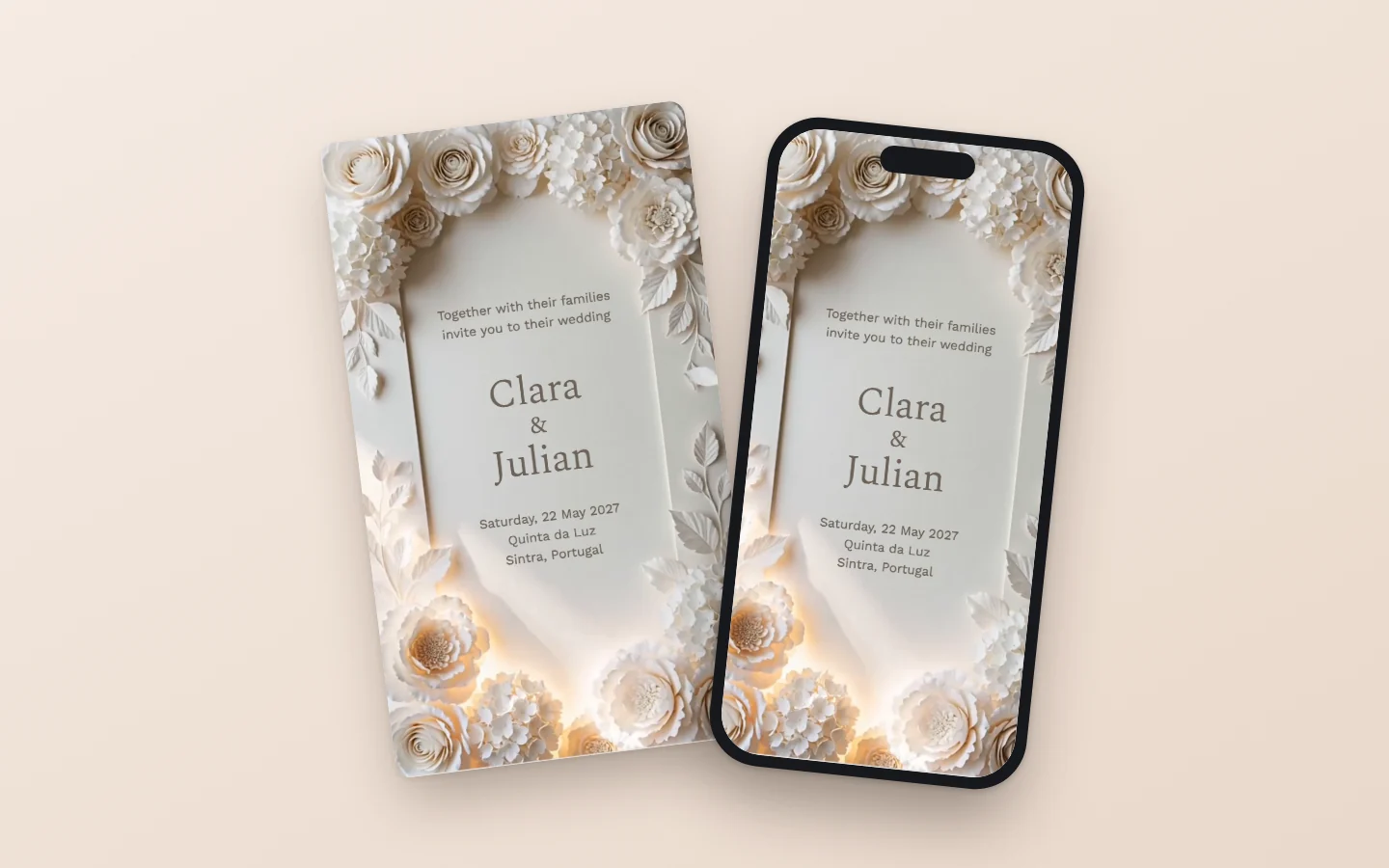
The question is less digital or paper than what each one is good at. Paper is a keepsake; a link is a working tool. Most couples end up with both, and the useful decision is which job each one does.
What paper does well
A printed invitation is an object. It sits on a fridge for months and ends up in a memory box, and for some guests, grandparents especially, it is the only kind of invitation that feels like one. Good stationery sets the tone of the day before anyone arrives.
Its weaknesses are practical. Printing and posting take weeks, a mistake costs a reprint, and replies come back by post, phone and word of mouth, for someone to gather into one list.
What a digital invitation does well
A link arrives the moment you send it, costs nothing to post, and can be corrected after it has gone out. It can also carry more than a card: a map, the day's schedule, the dress code, where to stay, and a reply form that counts the answers for you.
Its weakness is that it can feel throwaway. A plain event page with a stock photo reads as a notice, not an invitation. On a screen the design has to do the work that the weight of good card does on paper.
Money, and time
Printed invitations with envelopes and postage for a hundred guests commonly run to a few hundred euros, more with letterpress or foil. A digital invitation costs anything from nothing to a few dozen euros. The larger saving is time: no addressing, no queue at the post office, no reprint when a date changes.
The real difference is the replies
Whatever the invitation is printed on, someone has to count the replies, chase the missing ones and pass the meal choices to the caterer. Paper does none of that, and a reply page does all of it. That is why most couples who print still send a link.
Doing both
The common answer is both: a printed card for the keepsake, with a QR code or a short link for the replies. Guests scan, answer in a minute, and their answers land in the same list as those of the guests you invited by WhatsApp or email.
If your cards are already printed, a reply page on its own is all you need.
How to choose
- Mostly local guests and a relaxed day: a digital invitation on its own is enough.
- A formal wedding, or guests who expect paper: print, with a QR code for the replies.
- A destination wedding: digital first, for the travel details and the updates, with a printed card for those who want one.
- Little time: digital. It can go out tonight.
Collect the answers while you are at it
MyEventOS turns the invitation, the RSVP and the guest list into one link, and counts the replies as they land. Free to design, free to send, and the first ten replies are included.
Start creating free