Band, DJ or playlist: music for every part of your wedding
5 min read
The music is the one thing at a wedding that every guest experiences at the same time. It decides when people talk, when they cry, and when they get up. Think of it as a series of moments rather than one booking, and most of the decisions make themselves.
Think in parts of the day
A wedding has five or six musical moments, and each wants something different: the walk down the aisle and the walk back, the drinks after the ceremony, dinner, the first dance, the party, and the last song.
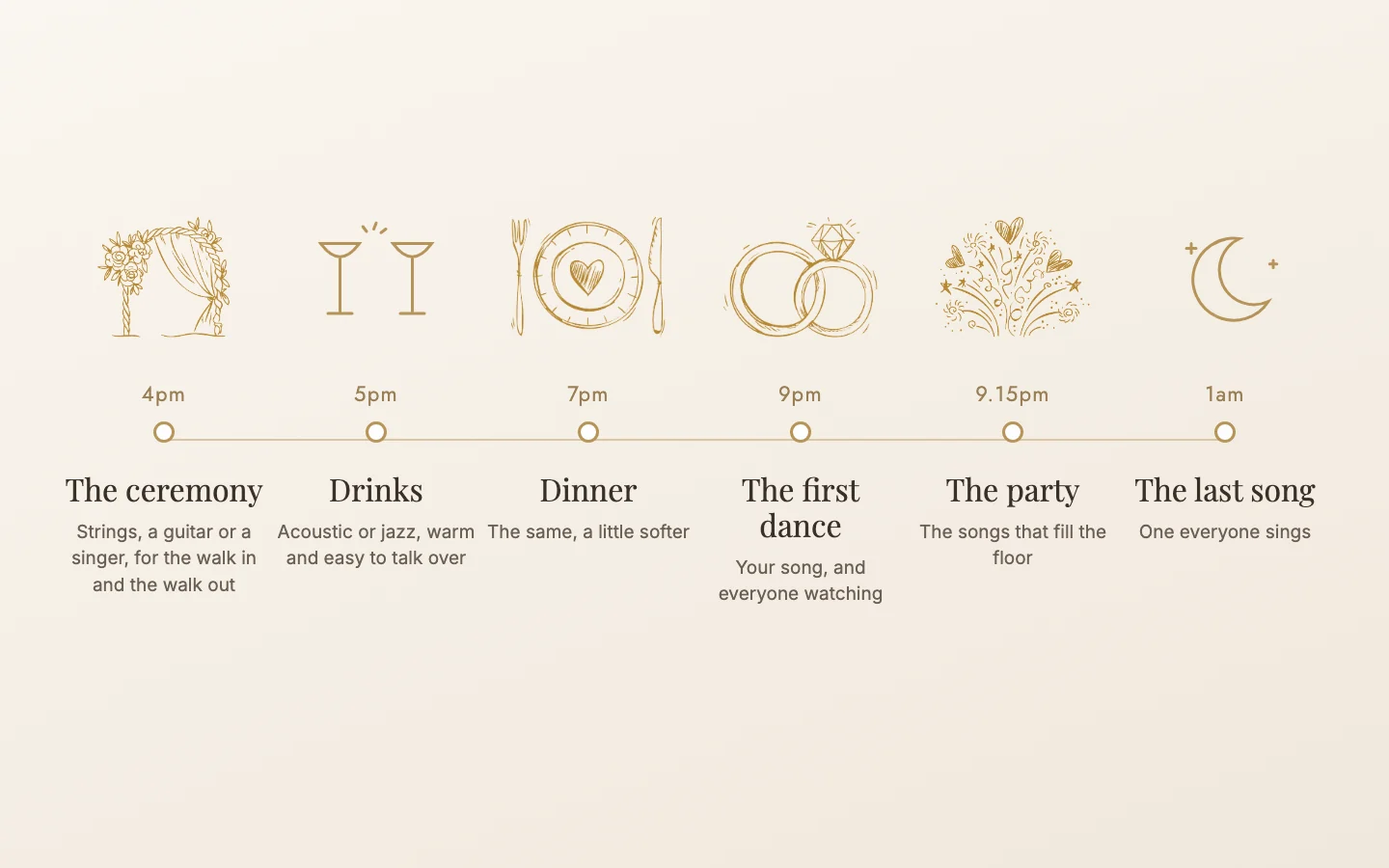
The ceremony wants live music if you can afford one thing live: a string duo, a guitarist, a singer. Drinks want something warm and unobtrusive that people can talk over. Dinner wants the same, a little quieter. The party wants whatever gets your particular guests on the floor, which is a different list for every family.
Band or DJ
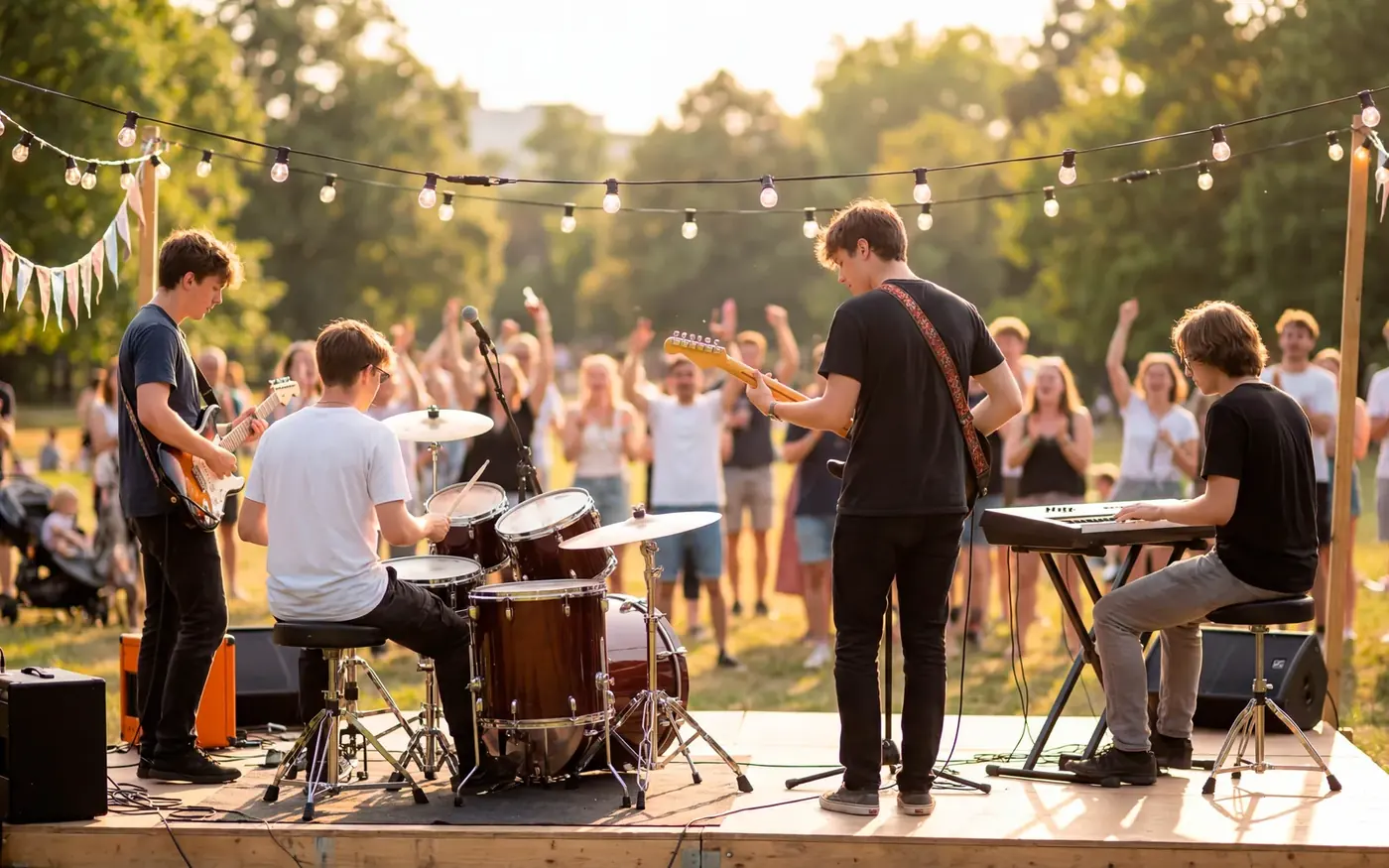
A band brings energy you can see: guests dance to people as much as to songs. The cost is a repertoire, set breaks, and room and power for the kit. A good band reads the room as well as any DJ, but cannot play the original of every song.
A DJ can play anything, in its original recording, takes up a corner, and can move from your grandparents' songs to your friends' in two bars. The best ones are hosts as much as players: they announce the speeches, keep time, and know when to put on the song that fills the floor.
Many couples do both: musicians for the ceremony and drinks, a DJ for the party, sometimes with a saxophone or a violin playing over the DJ's set for an hour. It is often the best value of the three.
Before you book
Popular musicians are booked nine to twelve months ahead for summer Saturdays. Ask to see them play live, or a video of a real wedding rather than a studio reel. Ask how long they play and how the breaks are covered, what happens if the evening runs over, and whether they bring their own sound and lights.
Ask the venue too. Many have a sound limit, a curfew, or a rule about live music outside after a certain hour, and it is better to know before the contract than on the night.
Must play, and do not play
Give whoever plays two short lists: the songs you must hear, with the moment for each, and the songs you never want to hear at your wedding. Keep the first list short, ten or fifteen songs, so the person reading the room still has room to work.
Add the songs that mean something to your families: a song from the old country, the one your parents danced to. Played at the right moment, those are the dances people talk about afterwards.
Ask your guests
A question on the RSVP, "Which song will get you dancing?", gives the DJ a list built from the people who will actually be on the floor. Guests like being asked, and they get up when they hear their song.
The invitation can set the tone before anyone arrives: on MyEventOS, a track from the music library can play softly as guests read it.
Collect the answers while you are at it
MyEventOS turns the invitation, the RSVP and the guest list into one link, and counts the replies as they land. Free to design, free to send, and the first ten replies are included.
Start creating free