A Greek Orthodox wedding in Cyprus: the rings, the crowns and the walk
6 min read
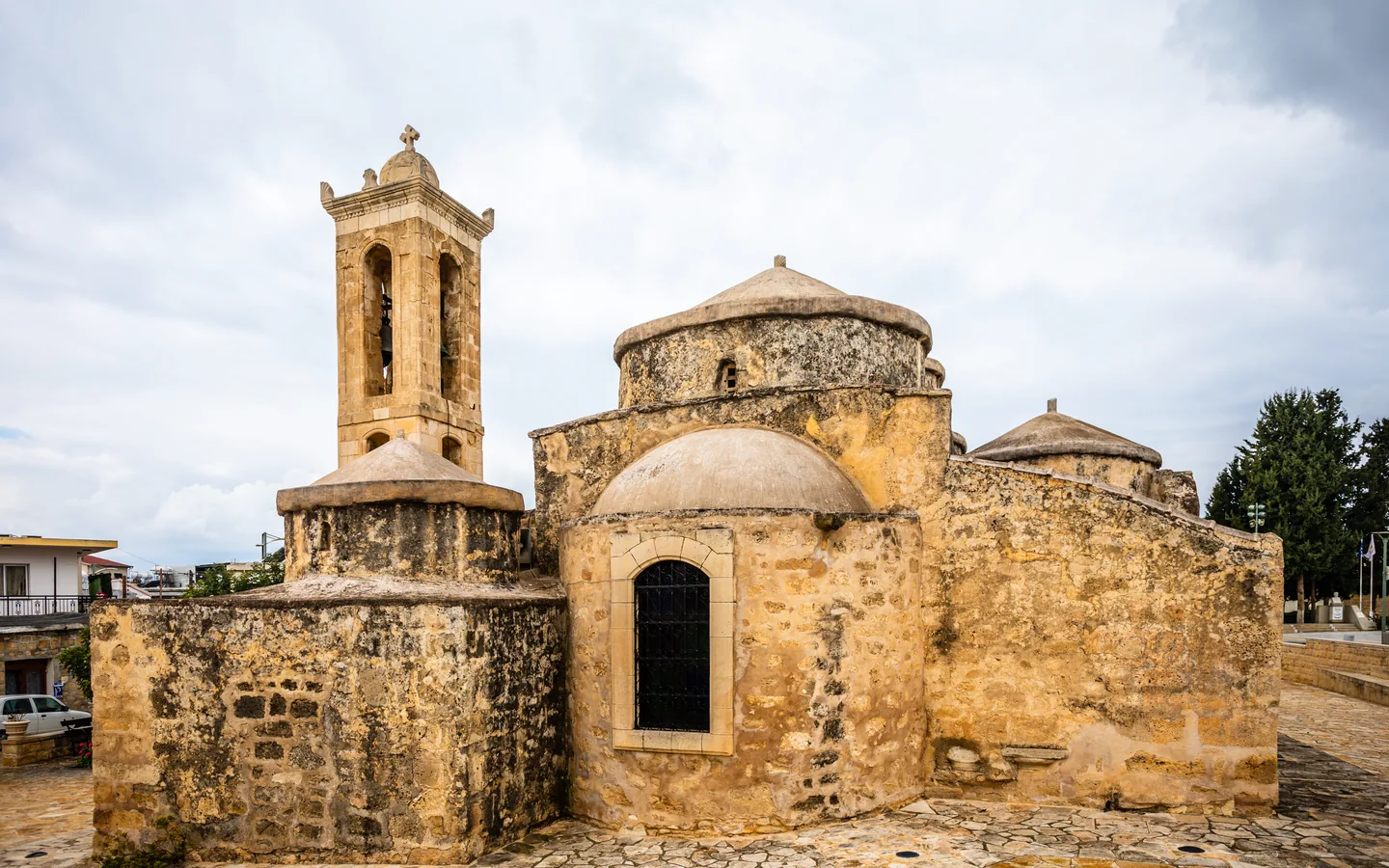
Most Cypriots still marry in church, and a church wedding is the heart of the day even when the party is bigger than the village. For guests from abroad it can be the most moving part, and the least familiar: nothing is said by the couple, and everything is done three times.
Who can marry in church
The Church of Cyprus marries a couple when both partners are baptised Christians and at least one of them is Orthodox. It asks for each partner's baptism certificate, from both churches if one is not Orthodox, and for proof that each is free to marry, from the church and from the state. A partner who is not baptised can marry in church only after being baptised; otherwise the couple marries at the town hall.
A wedding by a registered Orthodox priest is a legal marriage in Cyprus, so no separate civil ceremony is needed. Ask the parish and the bishopric early: the papers take time, and a partner from abroad needs their documents translated and apostilled.
The koumbaros and the koumbara
The koumbaros (or the koumbara, or both) is the couple's sponsor: closer to a godparent than a best man. They exchange the rings and the crowns, stand beside the couple through the service, and by tradition often go on to baptise the couple's first child. The church usually asks that the sponsor be Orthodox.
The service, step by step
- The betrothal: the priest blesses the rings and places them, and the koumbaros exchanges them between the couple three times. In Cyprus and Greece rings are worn on the right hand.
- The candles: the couple hold tall decorated candles, lit for the service.
- The crowning: the stefana, two crowns joined by a ribbon, are placed on the couple's heads and swapped three times by the koumbaros. They are the centre of the service: the couple are crowned as the king and queen of their own home.
- The readings: from the Epistle and the Gospel.
- The common cup: the couple drink from one cup of wine, three times.
- The walk: the priest leads them three times round the table, the dance of Isaiah, while guests shower them with rice and petals.
- The blessing: the crowns are lifted and the couple are blessed as married.
There are no vows and no first kiss on cue. The whole service takes under an hour, and in Greek: a printed sheet in your guests' languages helps them follow.
After the church
Outside, the couple and their parents stand in a line and every guest passes to wish them well: "na zisete", may you live long, to the couple, and "na sas zisoun" to the parents. Guests often give their gift here, in an envelope, and receive a bonbonnière of sugared almonds. With a few hundred guests the line takes a while, and it is part of the day, not a delay.
The crowns go home with the couple and are kept in a glass case, the stefanothiki.
When churches do not marry
Orthodox churches do not marry couples during Lent and Holy Week, from 1 to 15 August, or on some feast days; in 2027 Lent runs from 15 March to Easter on 2 May. Saturdays and Sundays are the favourite days. Ask the parish what it keeps before you fix the date.
For guests at an Orthodox wedding
Do
- Cover your shoulders inside the church.
- Throw the rice at the walk round the table, not before.
- Say "na zisete" in the line afterwards.
Don't
- Expect to sit throughout: village churches are small and many guests stand outside.
- Photograph during the service unless the couple have said it is fine.
Collect the answers while you are at it
MyEventOS turns the invitation, the RSVP and the guest list into one link, and counts the replies as they land. Free to design, free to send, and the first ten replies are included.
Start creating free